
Building Across Borders: How Contract Strategy Determines the Success of Pacific Construction Projects
CONTRACTS
Building Across Borders: How Contract Strategy Determines the Success of Pacific Construction Projects
In the world of international construction, the greatest risks often arise long before the first foundation is poured or the first wall is erected. While engineering and project management remain critical to successful delivery, experienced contractors understand that the true success of a project frequently depends upon the quality of the contract governing the relationship between the parties.
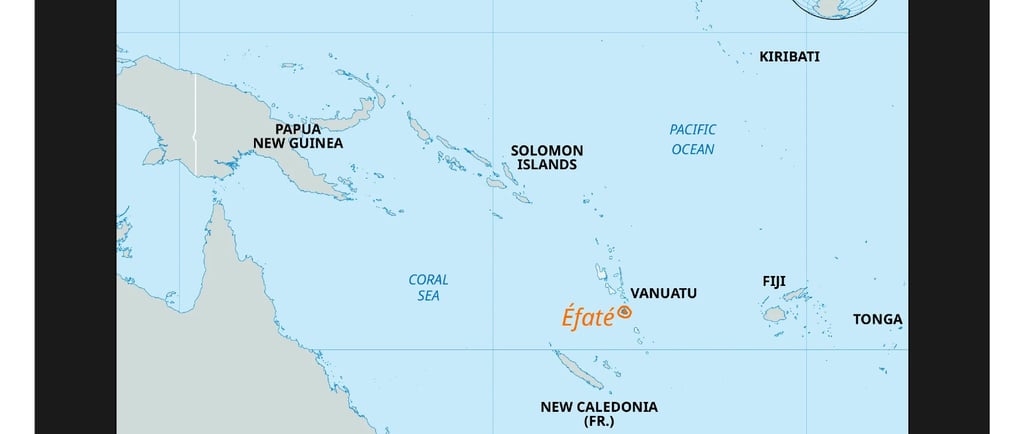
A recent engagement undertaken by Legal Intel illustrates this reality. The assignment involved advising on and preparing a contractor-side commercial construction agreement for a significant rebuilding and refurbishment project in the Republic of Vanuatu. The contractor, an established construction company operating within the Pacific region, required a commercially balanced contract capable of addressing the unique legal, financial, logistical, and operational risks associated with cross-border construction works.
Rather than simply adapting a standard domestic construction template, the engagement required a detailed analysis of Vanuatu law, international construction principles, common-law contract doctrines, Pacific-region project risks, and contractor risk allocation strategies.
1. The Emerging Importance of Cross-Border Construction Contracts
1.1 A Changing Construction Environment
Construction projects are increasingly international in nature. Contractors regularly source materials from multiple countries, engage consultants from different jurisdictions, and perform works in locations far removed from their home markets.
The Pacific region has become a particularly active area for infrastructure, tourism, commercial redevelopment, and rebuilding projects. As investment activity increases, contractors are finding themselves exposed to legal systems and commercial environments that differ significantly from those encountered in Australia, New Zealand, Europe, or North America.
1.2 Why Traditional Construction Contracts Are Often Inadequate
Many construction agreements continue to rely on standard forms originally designed for projects undertaken in stable domestic markets. These documents frequently fail to address the realities of island economies where supply chains are dependent on shipping routes, construction materials are imported, and natural disasters remain an ever-present risk.
As a result, contractors often assume liabilities that they cannot realistically control.
The Legal Intel engagement sought to address these issues through a comprehensive contractor-focused risk management framework specifically designed for an international Pacific construction project.
2. Understanding the Vanuatu Legal Environment
2.1 Construction Regulation in Vanuatu
The Republic of Vanuatu maintains a developing regulatory framework governing construction activity. Contractors operating within the country must comply with statutory obligations arising under the Building Act and associated building regulations.
In addition to legislative requirements, construction projects remain heavily influenced by common-law principles inherited through historical legal development and judicial practice.
For foreign contractors, this creates an environment where contractual clarity becomes particularly important. Any ambiguity concerning payment obligations, site risks, completion obligations, or dispute procedures can quickly escalate into costly disputes.
2.2 The Need for Jurisdiction-Specific Drafting
International projects frequently encounter difficulties when parties attempt to use contracts drafted for entirely different legal systems. A clause that operates effectively in one country may be unenforceable or commercially impractical in another.
Consequently, the contract developed during this engagement was structured to align with Vanuatu legal requirements while simultaneously incorporating internationally recognised construction risk-management principles.
3. The Commercial Reality of Building on a Pacific Island
3.1 Logistics as a Legal Risk
Unlike projects located within major metropolitan centres, Pacific construction projects depend heavily on international shipping networks.
Construction materials may travel thousands of kilometres before arriving on site. Delays arising from adverse weather conditions, customs inspections, vessel scheduling changes, or port congestion can significantly affect project timelines.
From a legal perspective, the central question becomes straightforward: Who bears the risk of those delays?
A poorly drafted contract often transfers that burden entirely to the contractor, even when the contractor possesses no ability to influence shipping operations.
The agreement prepared through this engagement sought to allocate such risks fairly and realistically.
3.2 Supply Chain Disruption and Cost Escalation
Global construction markets have experienced unprecedented volatility during recent years. Material shortages, labour scarcity, fuel price increases, and inflationary pressures have significantly altered project economics.
Where projects extend over many months, contractors face the possibility that the costs originally used to calculate their tender price may no longer reflect market reality.
The contract therefore incorporated mechanisms designed to address cost escalation, foreign exchange fluctuations, and supply-chain disruption events while preserving commercial certainty for both parties.
4. Payment Security Remains the Most Critical Construction Issue
4.1 Construction Disputes Often Begin with Cash Flow
Industry research consistently demonstrates that contractor insolvency is frequently caused by delayed payment rather than poor project performance.
Many otherwise profitable projects become financially distressed when payment certification processes are delayed or when principals withhold funds pending unrelated disputes.
Recognising this reality, Legal Intel's drafting approach prioritised payment security mechanisms intended to provide greater certainty regarding progress claims, retention funds, and payment timeframes.
4.2 The Importance of Contractual Payment Discipline
Modern construction law increasingly recognises that payment systems should encourage project delivery rather than facilitate administrative delay.
Accordingly, contemporary contracts are moving toward stricter certification procedures, clearly defined timelines, and reduced opportunities for tactical withholding of payments.
These principles formed a central component of the drafting strategy adopted for the Vanuatu project.
5. Latent Conditions Continue to Generate Significant Litigation
5.1 The Hidden Risk Beneath Every Site
One of the most common causes of construction disputes involves latent conditions.
Contractors frequently discover hidden structural defects, contamination, underground obstructions, unstable soil conditions, or previously unknown building deficiencies only after work has commenced.
These conditions often cannot be identified through ordinary inspection processes.
5.2 Allocating Risk to the Appropriate Party
The central legal issue is determining whether the contractor should absorb the cost of such discoveries or whether the project owner should bear responsibility.
Across many jurisdictions, courts increasingly recognise that contractors cannot reasonably price unknown conditions with complete accuracy.
The contract therefore adopted a risk allocation model designed to address unforeseen conditions in a commercially rational manner while reducing the likelihood of future disputes.
6. Force Majeure Has Become a Strategic Construction Issue
6.1 Lessons from Recent Global Events
The past decade has demonstrated how quickly construction projects can be disrupted by events outside the control of either contracting party.
Pandemics, extreme weather events, supply-chain interruptions, trade restrictions, and geopolitical instability have all affected project delivery.
6.2 Pacific Region Vulnerabilities
For island nations such as Vanuatu, these risks are amplified by geographic realities.
Cyclones, earthquakes, volcanic activity, flooding, and transportation disruptions create challenges that require careful contractual treatment.
The engagement therefore included the development of extensive force majeure and exceptional event provisions designed specifically for the Pacific operating environment.
7. Dispute Resolution in International Construction Projects
7.1 Why Jurisdiction Matters
Cross-border disputes present unique challenges. A favourable judgment obtained in one jurisdiction may prove difficult to enforce in another.
Consequently, sophisticated construction contracts increasingly rely upon arbitration mechanisms capable of producing internationally enforceable outcomes.
7.2 The Growth of International Arbitration
Arbitration has emerged as the preferred dispute resolution mechanism for many international construction projects due to its flexibility, confidentiality, technical expertise, and global enforceability.
The contract developed through this engagement reflected these international best practices while ensuring that local legal considerations remained appropriately recognised.
8. Legal Intel's Approach to Construction Contract Advisory
8.1 Moving Beyond Template-Based Drafting
One of the most common mistakes in construction contracting is the assumption that a standard template can adequately address every project.
In reality, every project presents unique commercial, operational, and legal risks.
Legal Intel's approach focuses on understanding the specific risk profile of each engagement before drafting begins.
8.2 Integrating Legal and Commercial Intelligence
Effective contract drafting requires more than legal knowledge. It requires an understanding of project delivery, supply chains, payment structures, risk allocation, stakeholder management, and dispute prevention.
The Vanuatu engagement demonstrated how legal advisory services increasingly intersect with commercial strategy and operational planning.
9. The Future of International Construction Contracting
9.1 Risk Allocation Will Continue to Evolve
As construction projects become more international and supply chains become more complex, parties will increasingly demand contracts that accurately reflect commercial realities rather than relying upon outdated precedents.
9.2 Prevention Rather Than Litigation
The most successful construction contracts are not those that perform well during litigation. They are those that prevent disputes from arising in the first place.
Clear drafting, balanced risk allocation, transparent payment mechanisms, and effective dispute management procedures remain the most effective tools available to project participants.
Conclusion
The recent Pacific-region construction engagement undertaken by Legal Intel demonstrates the growing importance of specialised legal and commercial advisory services in international construction projects. In today's environment, contractors are expected not only to deliver buildings but also to navigate complex regulatory frameworks, international supply chains, fluctuating economic conditions, and evolving legal obligations. Well-structured contracts have become strategic business instruments rather than simple legal documents. As construction activity continues to expand across the Pacific and other emerging markets, organisations that invest in sophisticated contract strategy will be better positioned to protect margins, manage risk, avoid disputes, and deliver successful projects.
© 2026. All rights reserved.